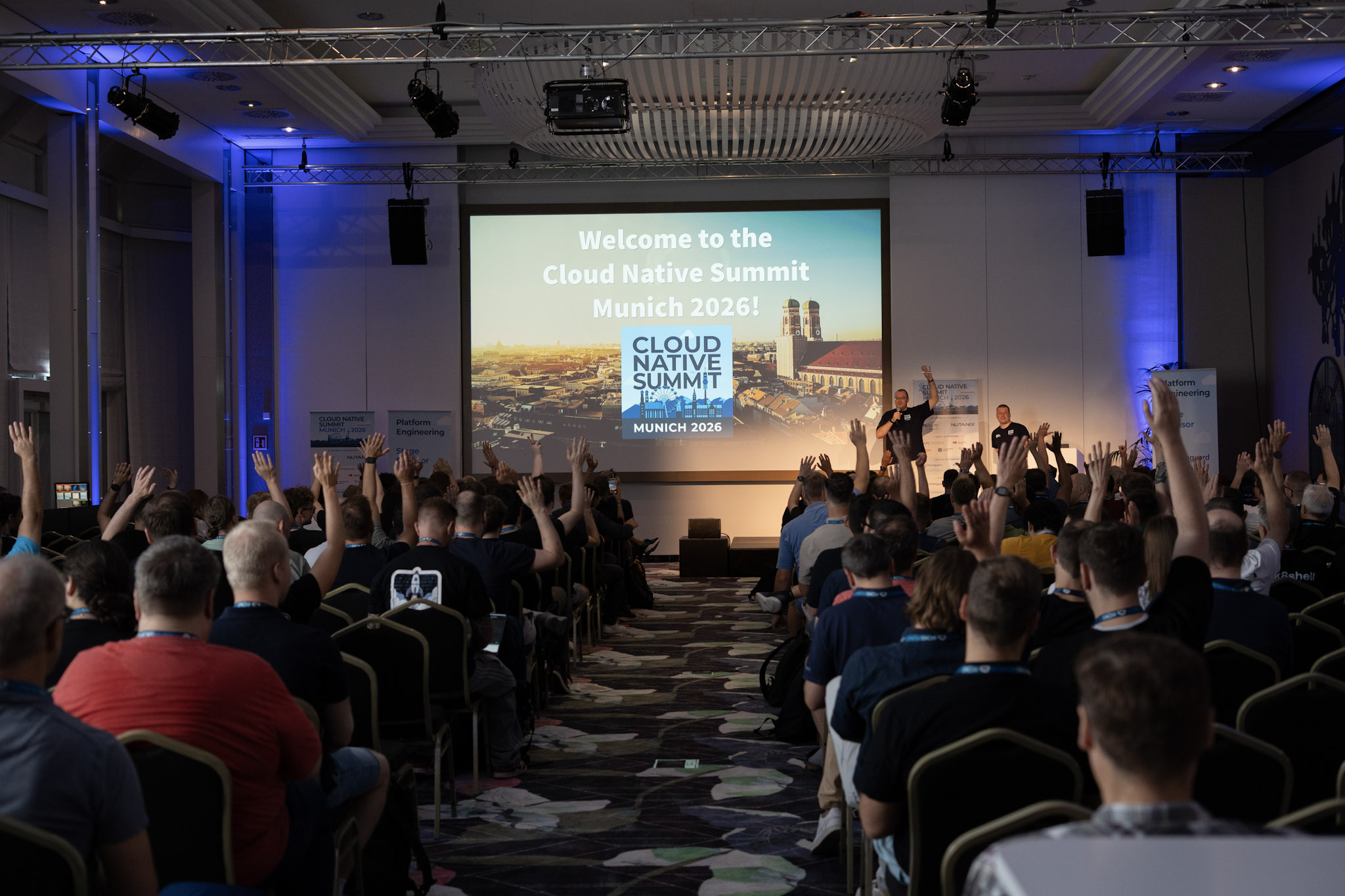

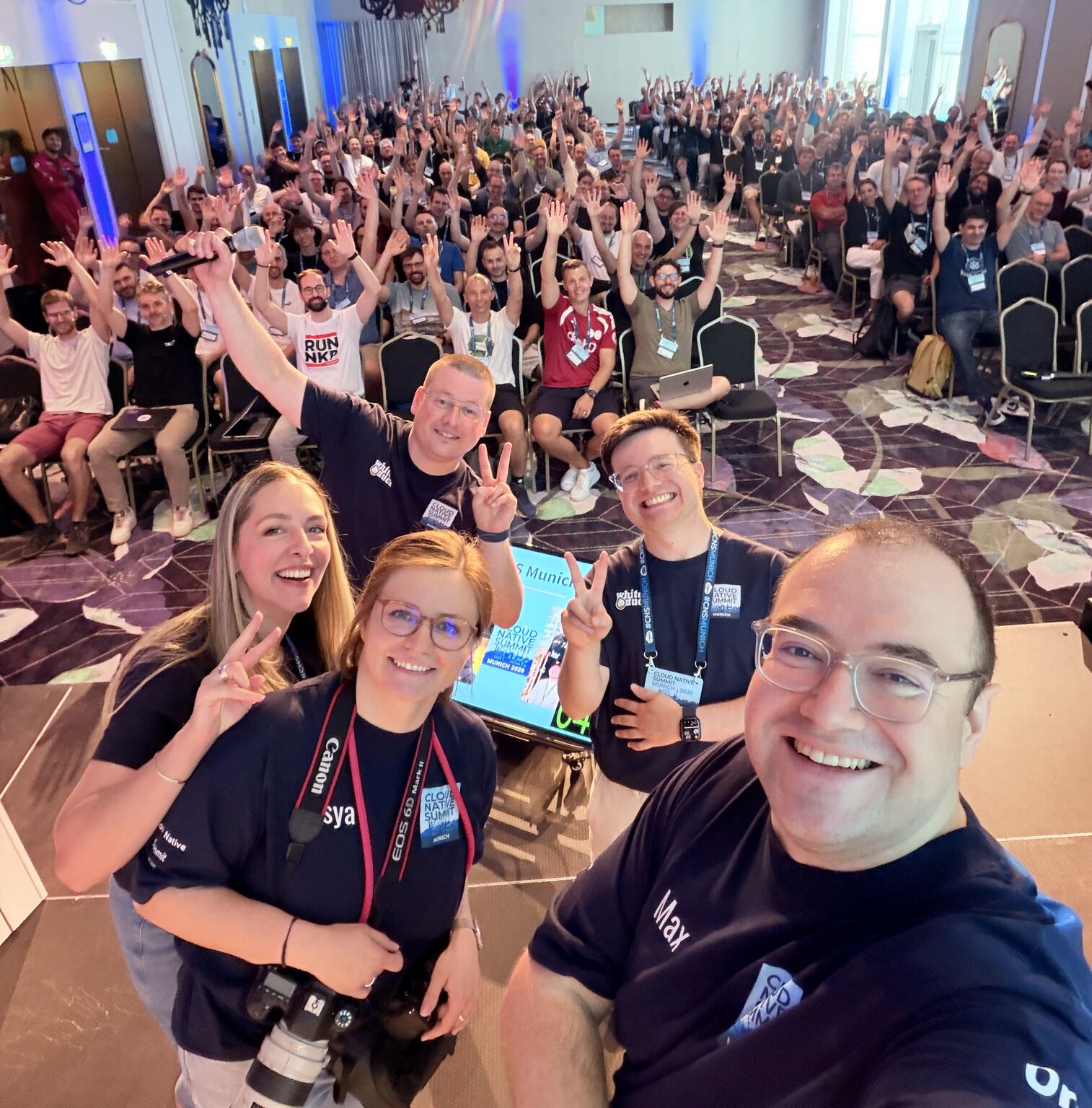
What a milestone year. Cloud Native Summit Munich 2026 was not just another edition. It marked five years of bringing the cloud-native community together in Munich. And this year felt special in every sense: bigger, more diverse, and packed with forward-looking discussions on where our industry is headed next.
The fifth edition of CNS Munich brought AI Engineering onto the stage as a full track in its own right, standing alongside Platform Engineering & Practices and Cloud Native & Open Source for the first time. It’s also the first edition organized under our non-profit structure, Förderverein Open Source, Cloud Native und Künstliche Intelligenz Bayern e.V., again together with our long-standing co-organizer Liquid Reply, now five years running. If one thing stood out this year, it’s that agentic AI stopped being a side conversation and earned a track of its own.
Community, Feedback, and the Hot Topics
This year, we welcomed 400+ attendees and 67 sessions, alongside 82 speakers who shared their knowledge, experiences, and visions for the future of cloud-native technologies.
What stood out most wasn’t just the scale—it was the mix of perspectives. From seasoned experts to speakers delivering their first-ever conference talks, the summit once again proved that it’s a space where new voices are encouraged and celebrated. None of this would have been possible without the support of our sponsors, who continue to help shape CNS Munich into what it is today.
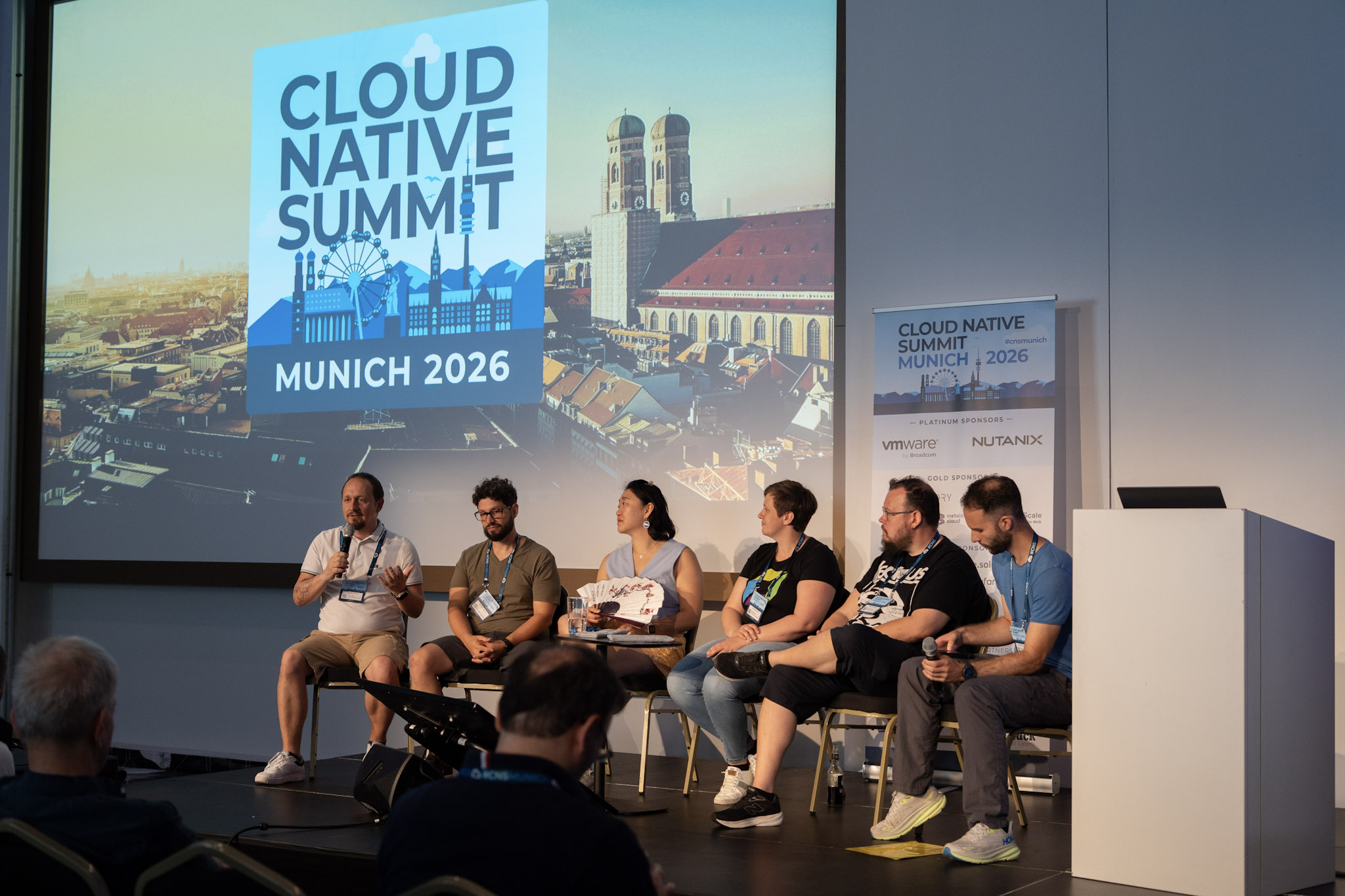
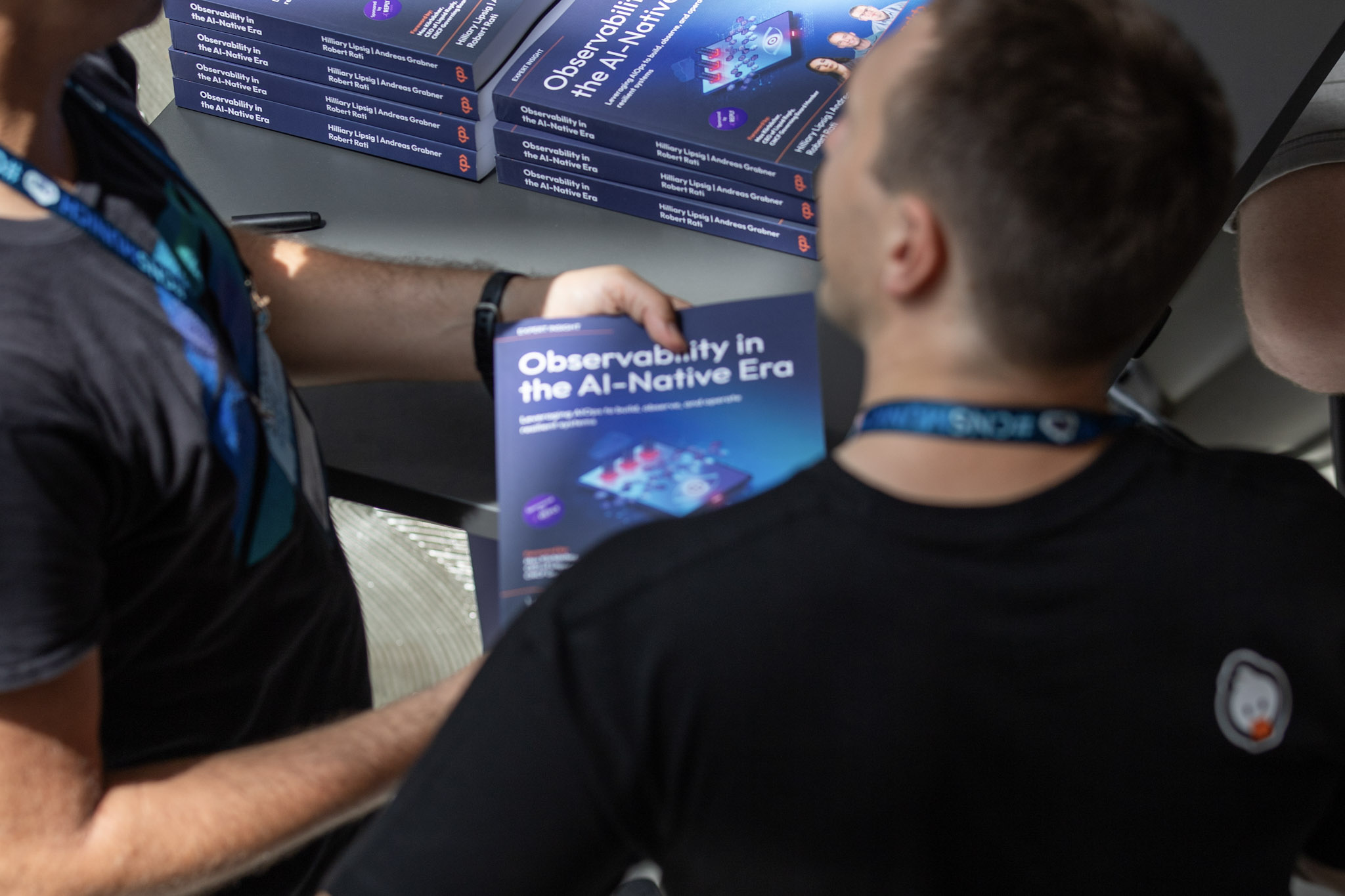
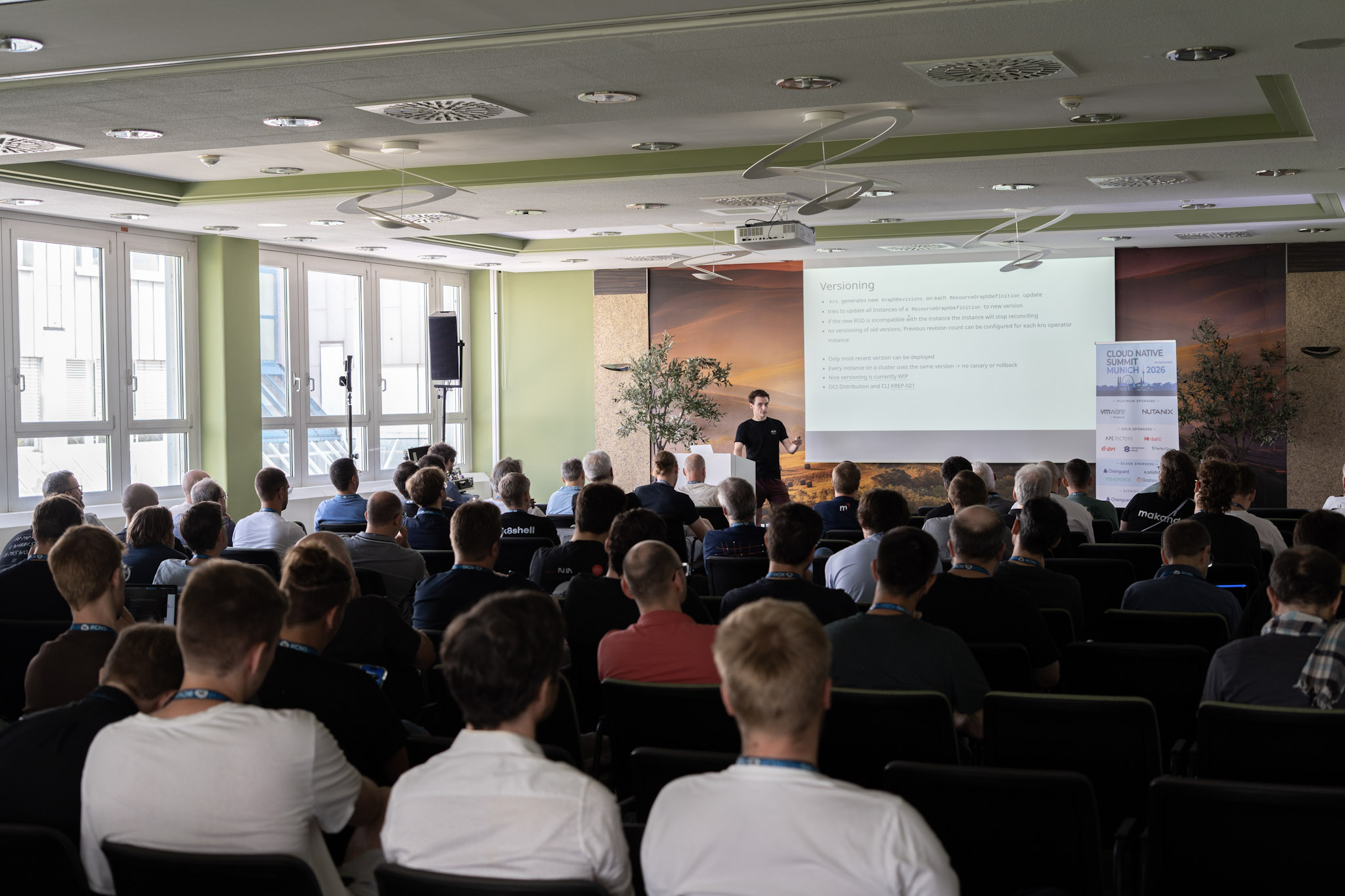
The sessions themselves told a clear story about where the room’s attention was this year. BMW’s talk on its Orbit platform, spanning 24 million connected vehicles, stood out as one of the strongest enterprise voices of the two days. 1KOMMA5° added a second, more AI-native perspective, walking through how it pushed its own codebase past 80% AI-written code. Together, they were a reminder that CNS Munich reaches well beyond the core cloud-native crowd.
Across the 67 sessions, six themes stood out clearly:
- Agentic AI and AI agents, by far the dominant theme this year
- Kubernetes as AI infrastructure, from GPU scheduling to running small language models on CPUs
- Digital and cloud sovereignty, a theme that grew noticeably compared to 2025, with open standards repeatedly framed as the actual sovereignty strategy
- LLMOps, and the very real cost of running LLMs in production
- GitOps and platform APIs, with Crossplane, KRO, and KRM all getting stage time
- A visible backlash against unstructured “vibe coding,” in favor of more engineering discipline around AI-assisted development
The last two themes, platform APIs and agentic AI infrastructure, are exactly where we showed up on stage ourselves.
Open source had its own strong showing this year, too. Dapr agents reached v1.0 GA at KubeCon EU in Amsterdam back in March, and that milestone set up one of the more grounded conversations at CNS Munich: How do you actually run an agent in production, not just demo one? We’ve been working on exactly that question with our own Flock and Dapr integration, and it was good to see that story land with an audience that’s clearly past the demo stage and asking the harder operational questions.
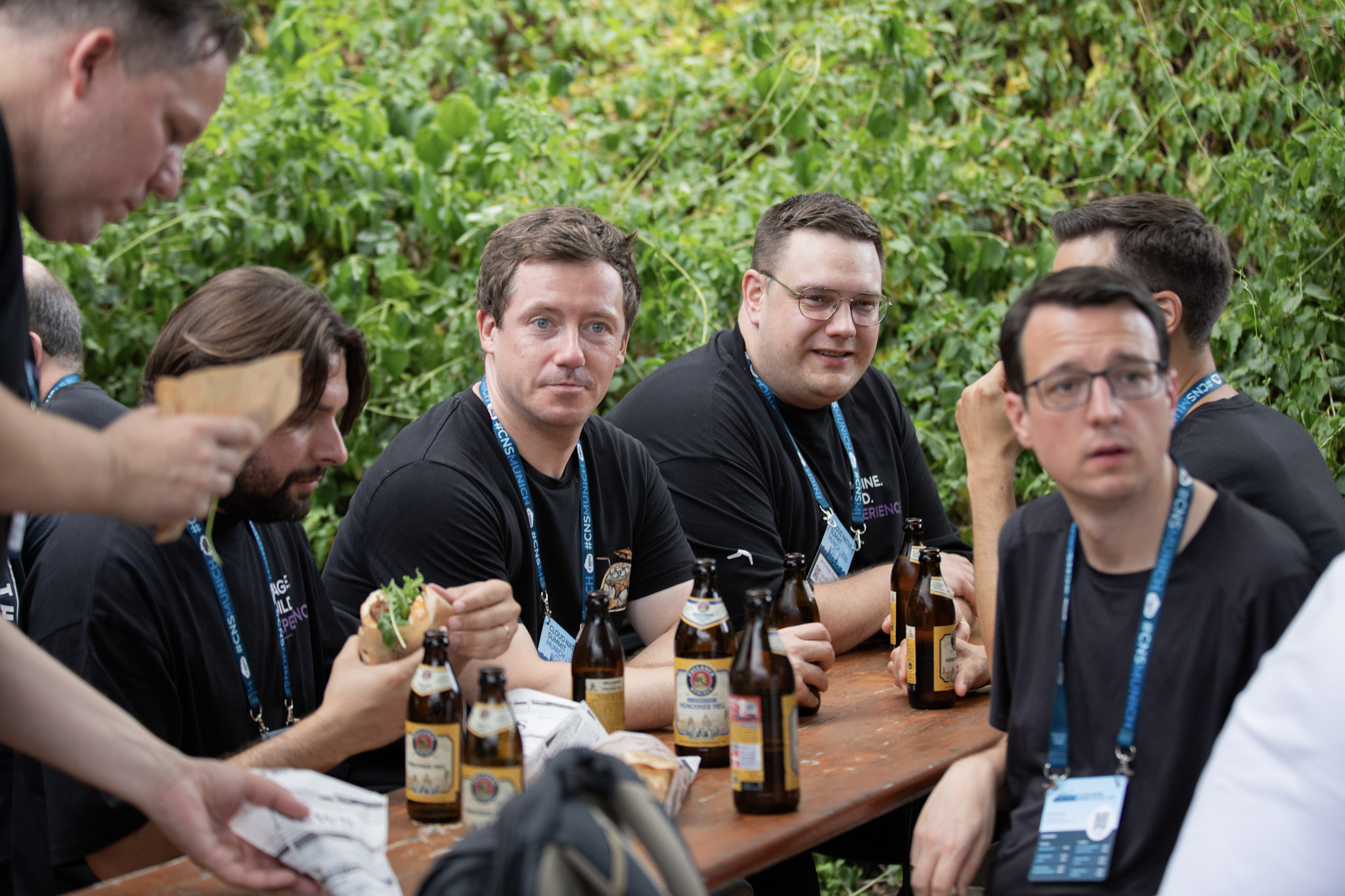
While the sessions delivered deep technical insights, Cloud Native Summit Munich has always been about more than just the agenda. It’s about the connections. The conversations. The shared curiosity. This year’s evening event captured exactly that spirit. We hosted a relaxed chill-out garden session, where attendees could unwind, connect, and continue discussions in a more informal setting.
A special highlight was the celebration of our 5th anniversary together with the community. This milestone deserved proper recognition:
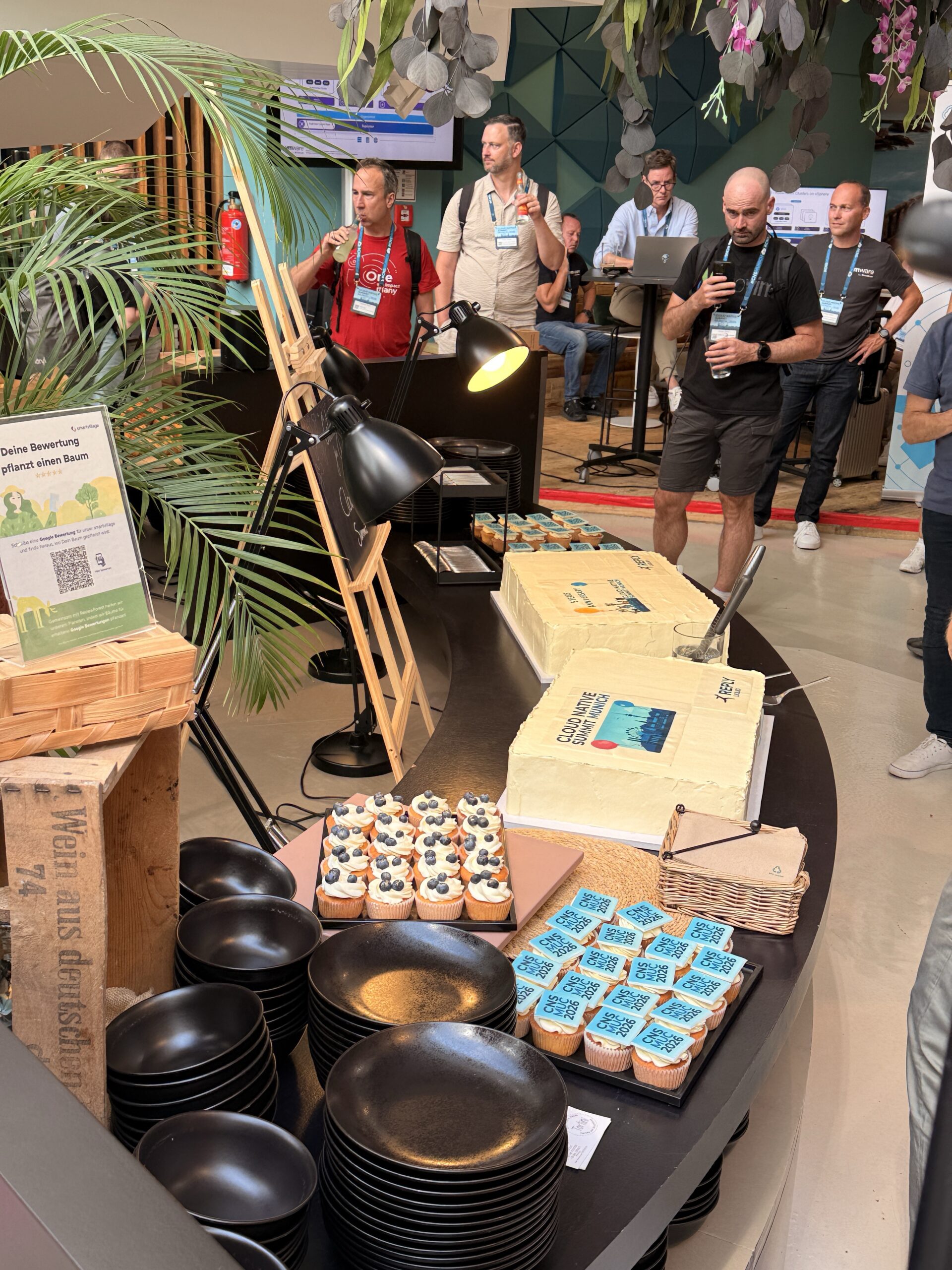
🎂 Cakes, muffins, and a moment to reflect on how far the event has come. From a growing idea to an established platform for cloud-native knowledge exchange, CNS Munich wouldn’t exist without its community.
white duck on stage
This year, we weren’t only organizing; we were also on stage, with four sessions across different topics:
Anela Avdibegovic: Community Is Your Most Underrated Scaling Strategy
Anela walked through how white duck grew from local meetups into a trusted voice across the DACH region and the honest version of that story: credibility in cloud native is built, not bought. Sharing failures alongside wins, consistently and in public, is what actually earns trust with a developer audience.
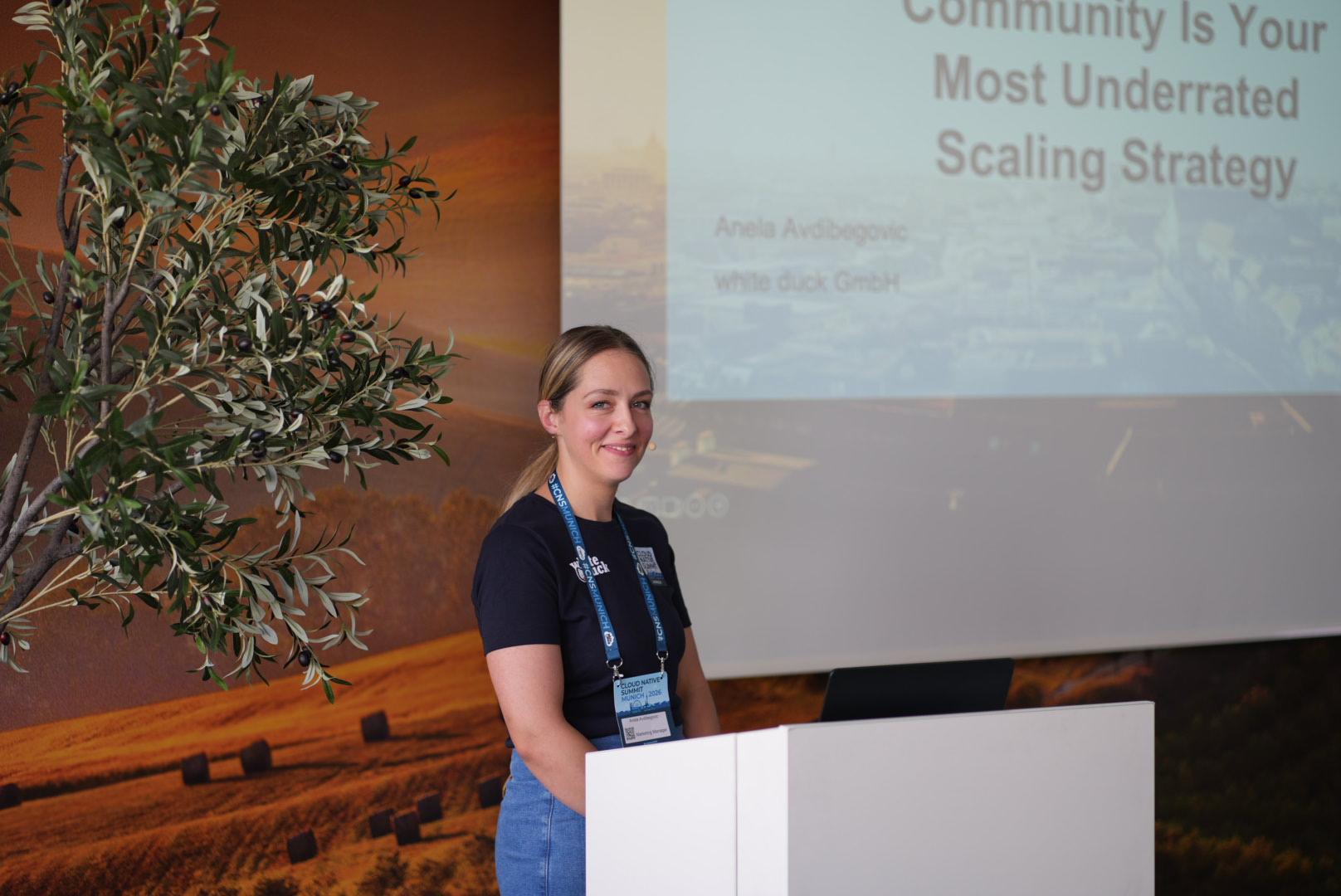
🗂️ Community Is Your Most Underrated Scaling Strategy
Martin Brandl & Tilman Sattler: Building Agents Is Easy. Running Them Is Not.
An LLM, a few tools, and a ReAct loop will get you an impressive demo fast. Martin and Tilman’s talk was about everything that happens after that: state, resilience, security, and operations. They showed how Flock’s blackboard architecture loosely couples agents and how Dapr’s state store lets that same blackboard run in-memory during local development or in Redis and a real database in production, switched through configuration alone, with no changes to the agent logic itself. The live demo walked the full path from local dev to a genuinely cloud-native operating model.
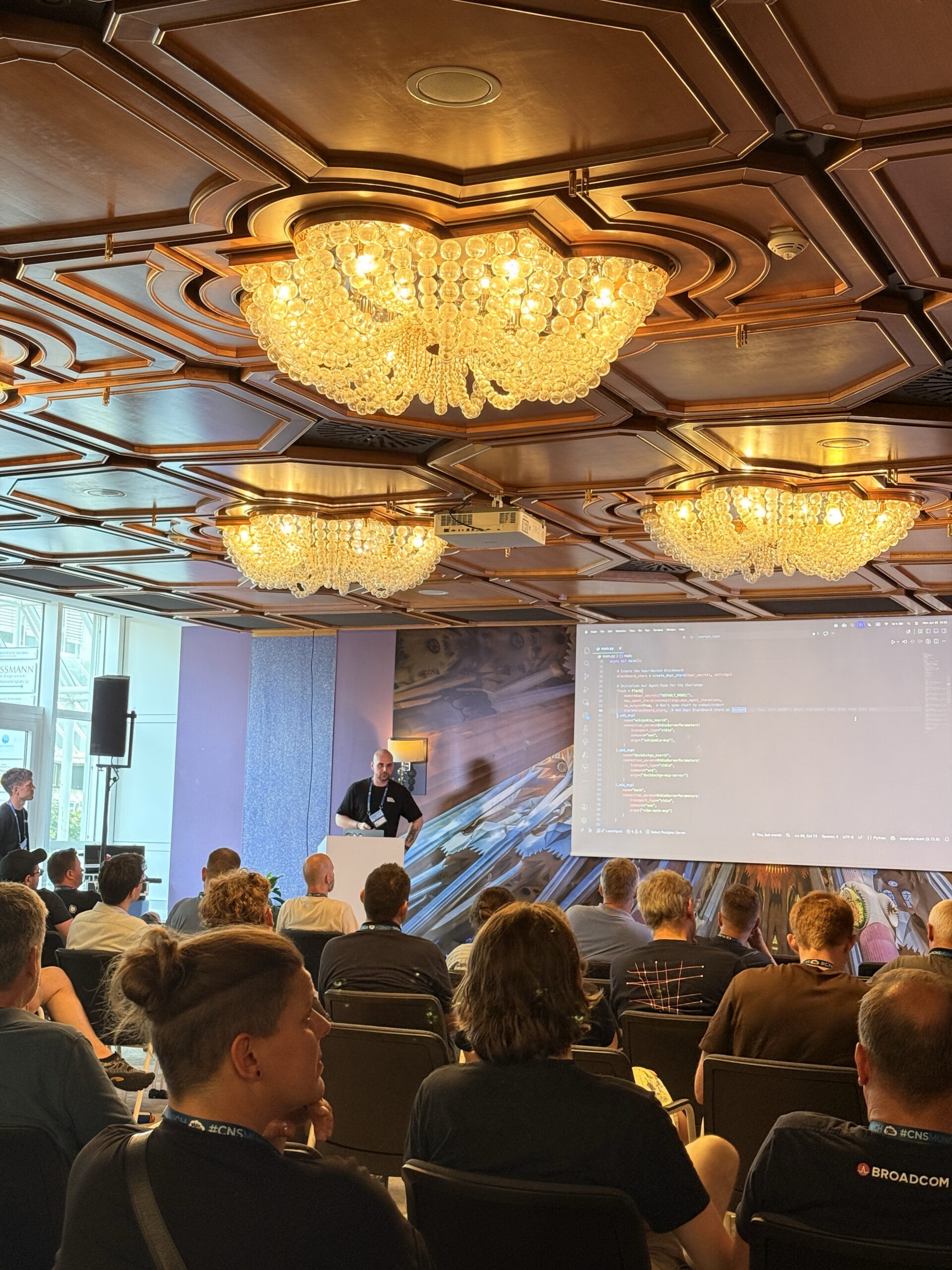
🗂️ Building Agents Is Easy. Running Them Is Not
Tilman Sattler & André Ratzenberger: Flock: Declarative Agents on the Blackboard (Workshop)
Most multi-agent systems don’t fail because of the LLM, they fail because of the orchestration around it. In this hands-on 120-minute workshop, participants built a single declarative agent, then chained it into a multi-agent pipeline, then added conditional routing, ending with a working agent team scored live in a framework-agnostic competition against rotating MMLU-Pro questions.
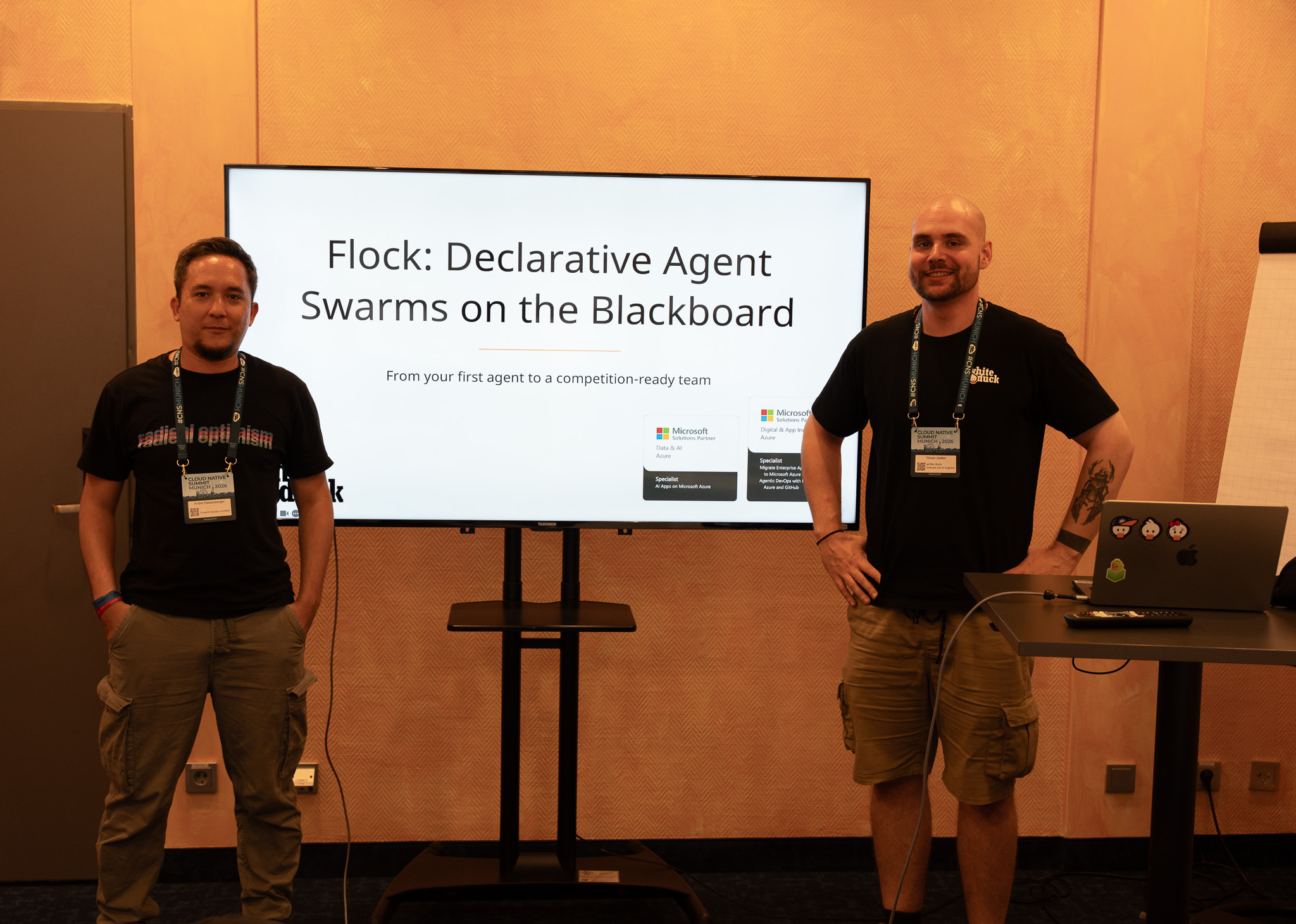
🗂️ Flock: Declarative Agents on the Blackboard
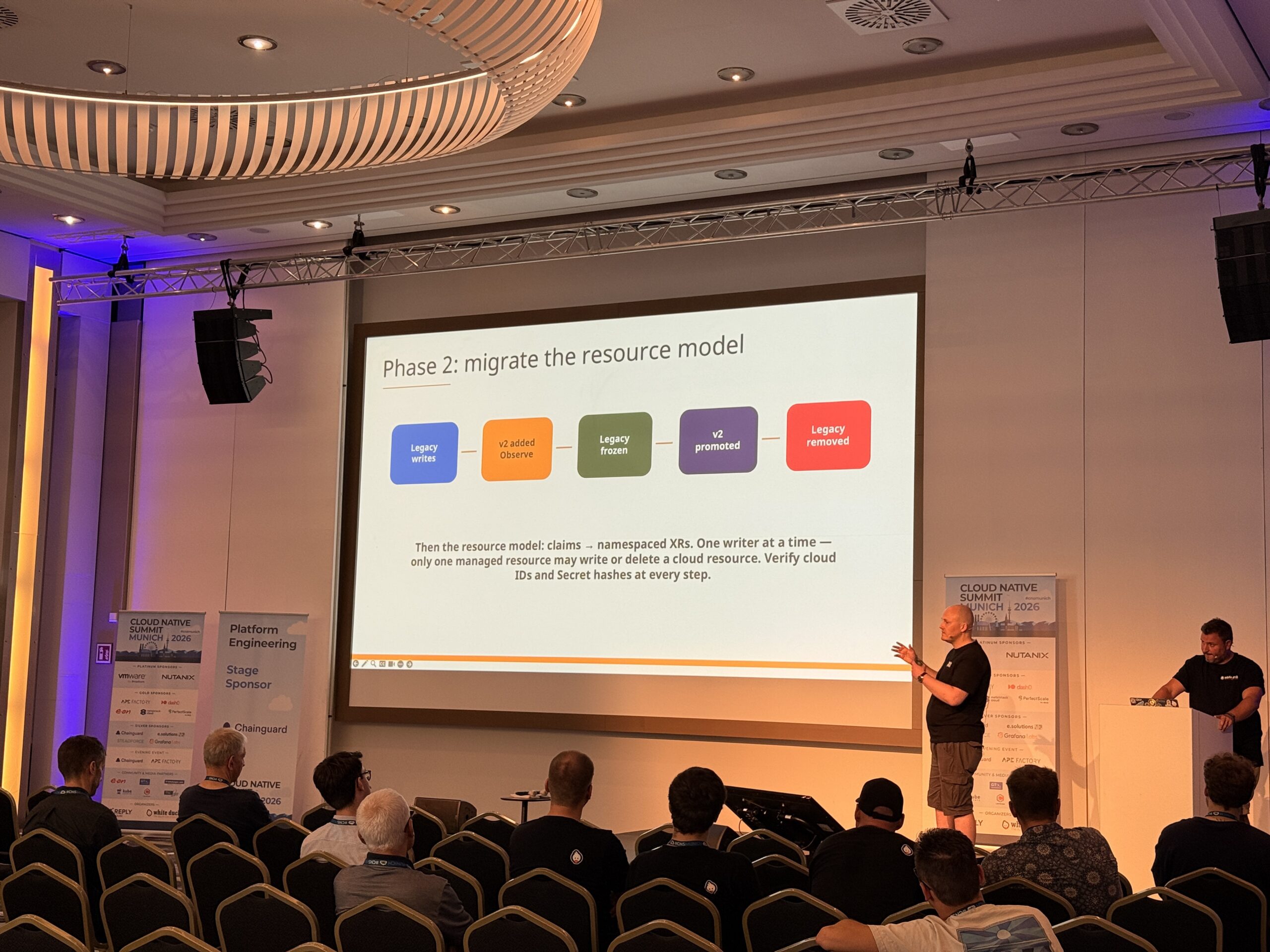
Philip Welz & Stephan Hüttner: Crossplane as Your Platform API: Decisions, Scars, and the v2 Upgrade
Plenty of “self-service platforms” are really just a different flavor of ticket system. Philip and Stephan showed the alternative they built: Crossplane as the actual API layer of their internal developer platform, with minimal XRDs, EnvironmentConfigs handling stage-specific context instead of hardcoded infrastructure references, and custom Go composition functions where declarative templating hit its limits. They didn’t skip the hard part either, including what it actually took to migrate a running production platform from Crossplane v1 to v2 without a push-button upgrade path.
🗂️ Crossplane as Your Platform API
Good Beans, Controlled Tokens: Token Control at the Booth
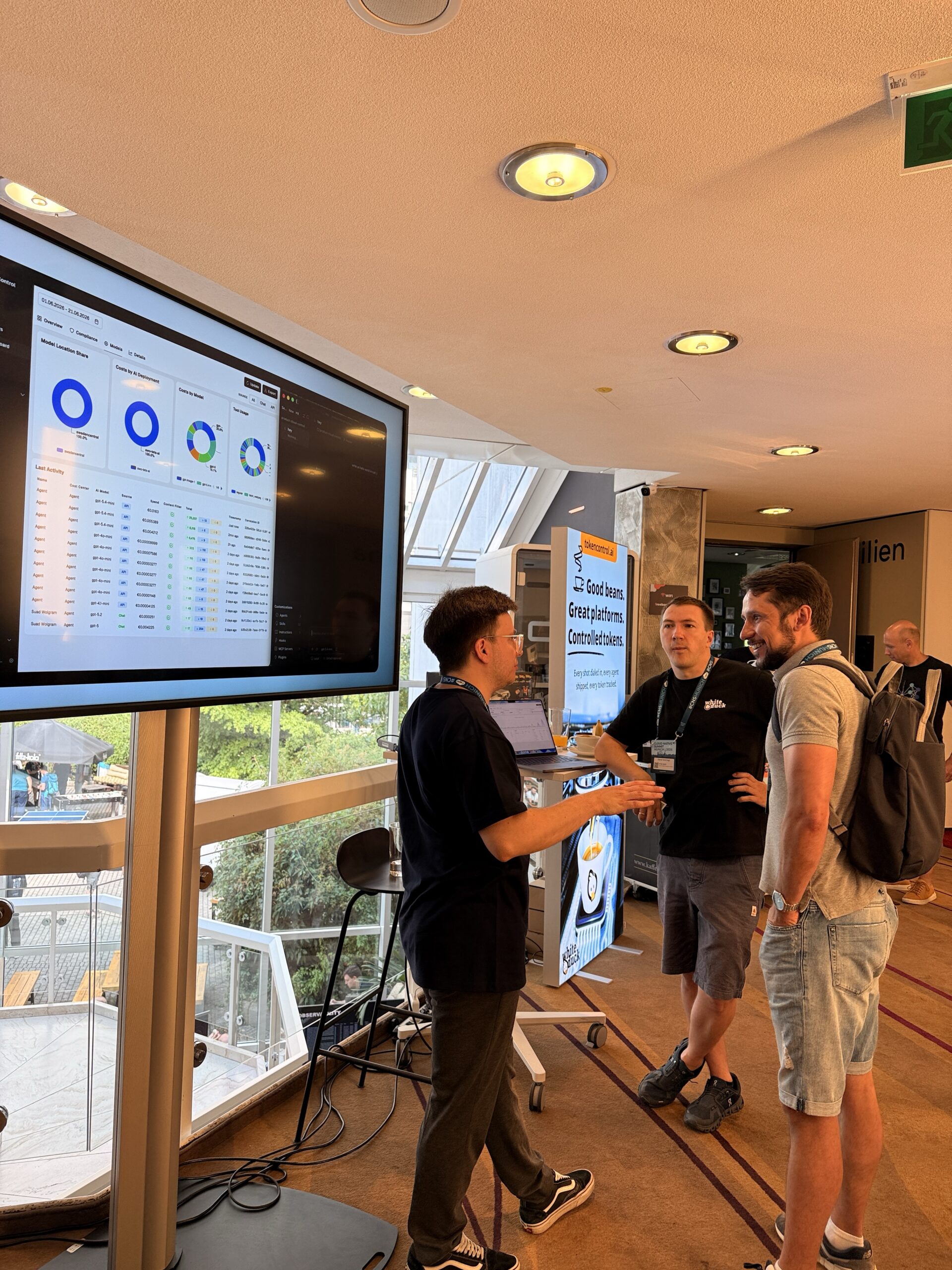
Token Control is our answer to a question every organization operating AI in production eventually runs into: Who is using which model? What is it costing? And can we prove any of it? It’s built around three pillars: FinOps, governance, and compliance, and it gives real-time visibility into AI spend before costs spiral, centralized control over who can access which models, and the audit trail needed for frameworks like the EU AI Act, all with data processed and stored inside the EU.
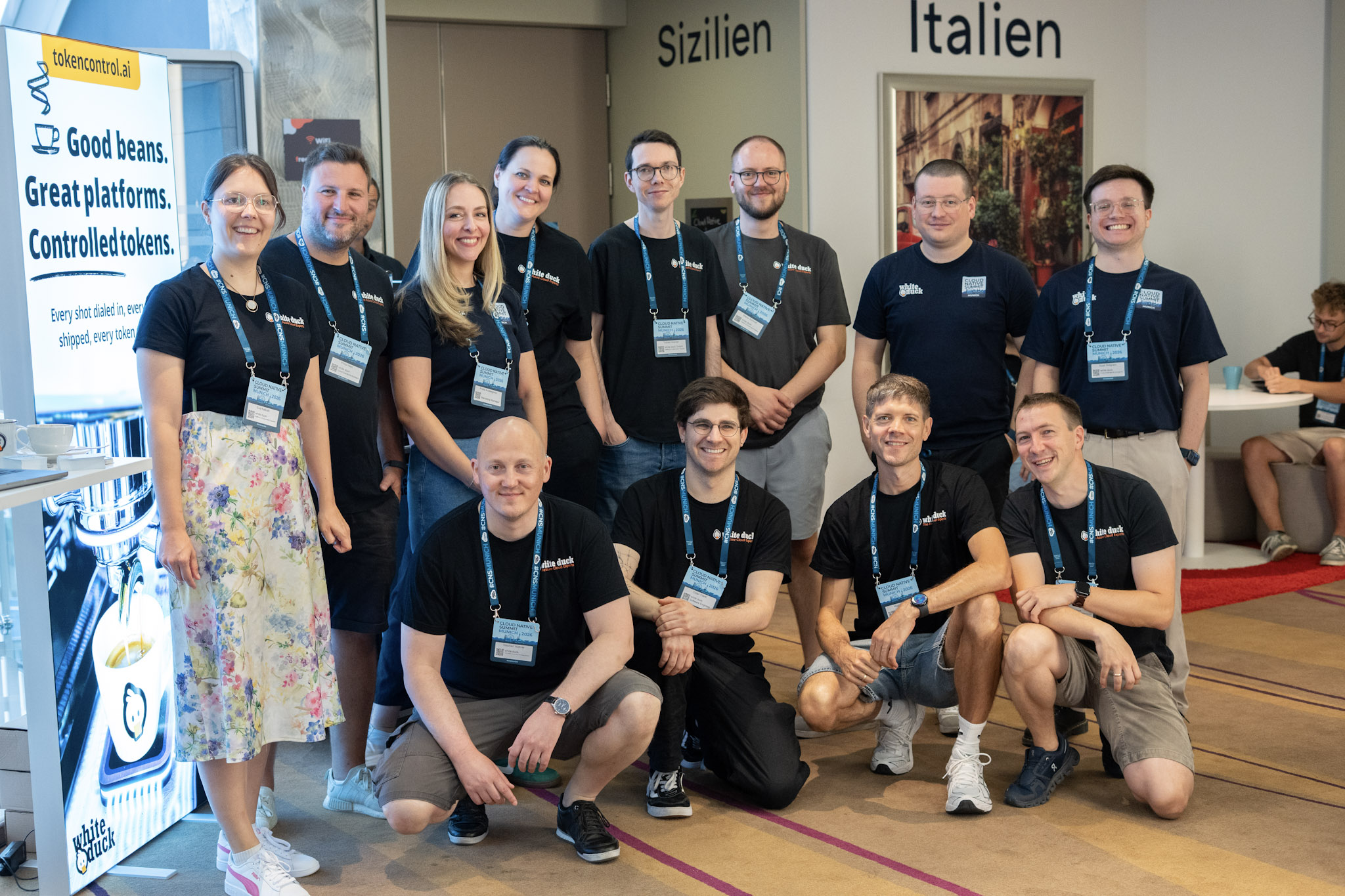
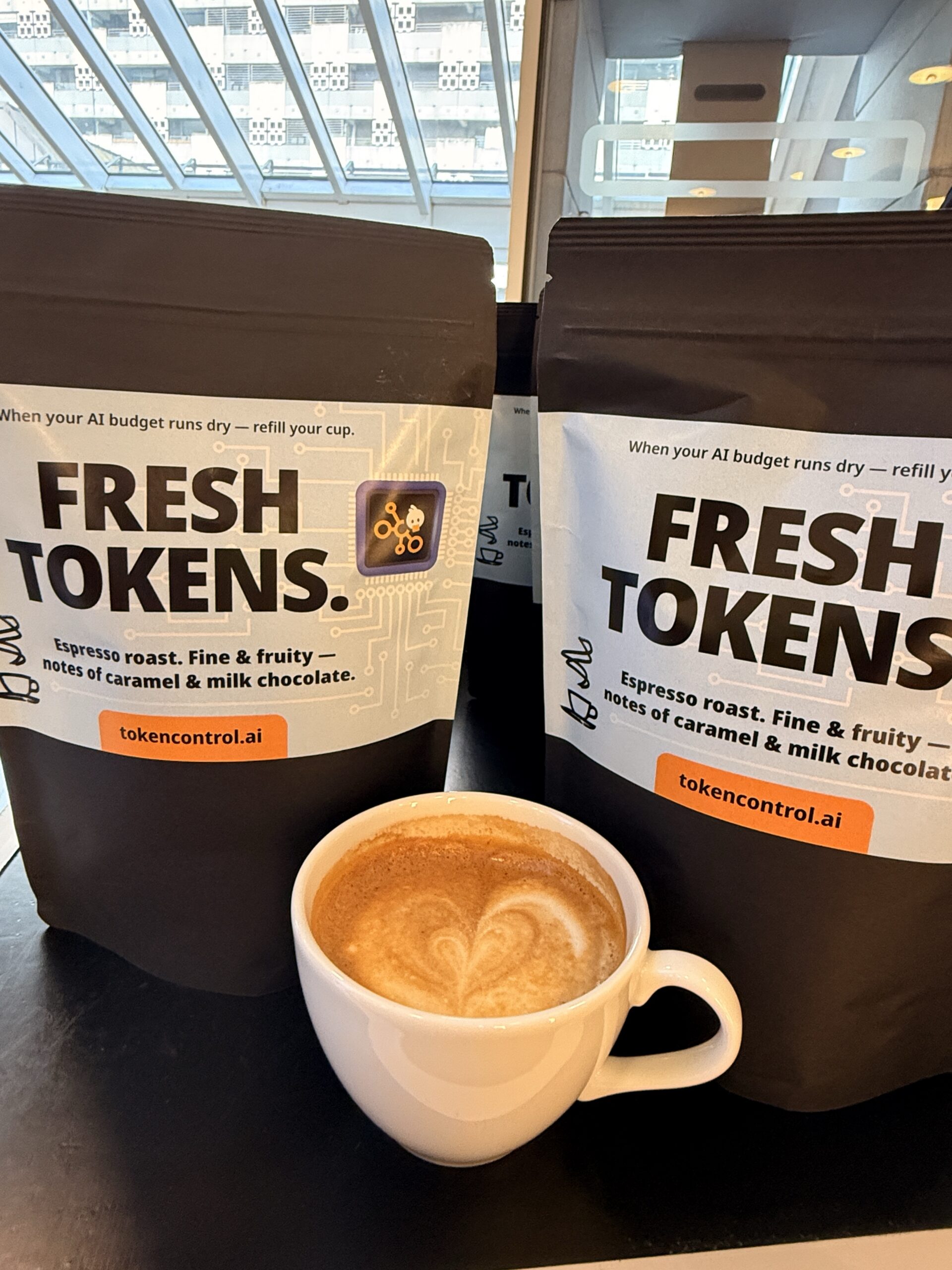
We carried that idea through the booth with a line that’s stuck with us since we first wrote it: good beans, great platforms, and controlled tokens. Every shot dialed in, every agent shipped, every token tracked.
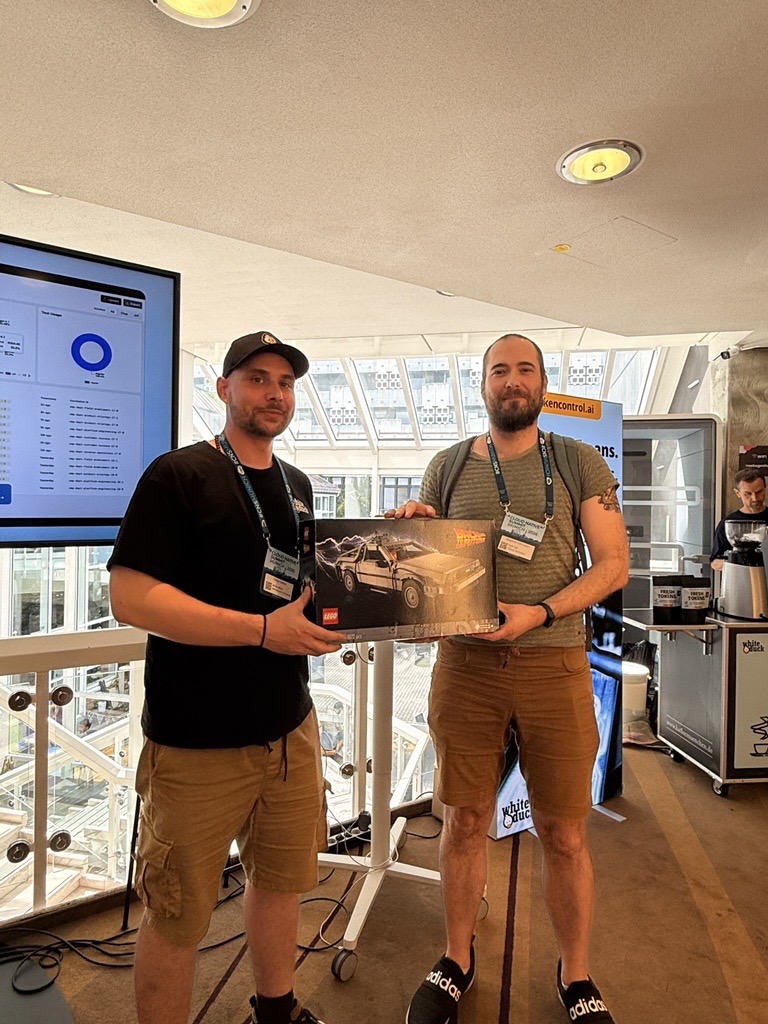
We turned our booth into the “Controlled Tokens Club” for two days, a real barista bar pulling shots right next to the Token Control demo. We roasted our own “Fresh Tokens” espresso for the occasion and handed out bags to everyone who stopped by, and honestly, the joke landed better than we expected. Refilling a cup and refilling an AI budget turned out to be a surprisingly easy comparison to make in person. Our Agentic AI Challenge ran the whole time as a live leaderboard alongside the bar, and we were genuinely glad to hand out the win by the end of the event.
Looking back, looking forward to 2027
Five years ago, CNS Munich started with 200 people in a room. This year, we’ve grown well beyond that, with a third full track that wasn’t a trend we chased: it reflected exactly where the sessions actually clustered. We showed up this year in two roles at once: as an organizer and as a practitioner voice of 2026’s hottest platform themes, Agentic AI infrastructure, and platform APIs.
Thank you for five editions, and see you at CNS Munich 2027.